Individual stator & rotor laminations
Stamped profiles supplied for your own stacking or downstream assembly process.
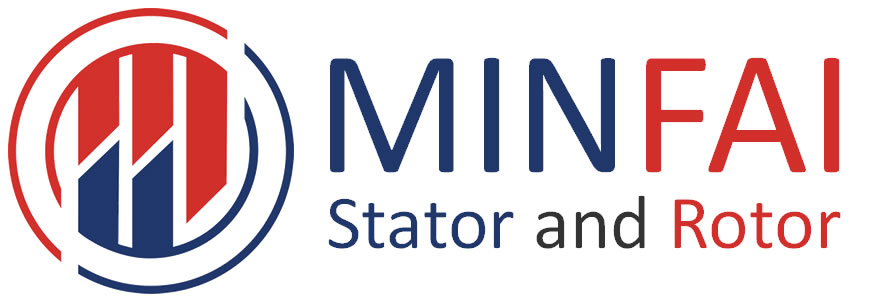
Source the form your production line needs: individual laminations, finished laminated cores, or a matched stator–rotor set built around your drawing.
 Product photograph from the Minfai catalog
SUPPLY OPTIONS
The same motor program may require loose stamped parts, assembled laminated cores, or both. We define the supply scope before tooling and sample approval.
Stamped profiles supplied for your own stacking or downstream assembly process.
Stacked cores supplied to the construction and inspection requirements agreed for the project.
Review mating dimensions and sample criteria together for a more complete motor program.
PRODUCT PHOTOGRAPHS
Browse product photographs and series references from the Minfai catalog. Confirm the application, dimensions, material, stack height and availability against your project drawing.
The short code is a website inquiry reference, not a dimension or manufacturer model. Similar appearance does not establish interchangeability.


WORKING WITH MINFAI
Six areas of support, from profile selection to samples and delivery.
Review material, tooling and volume together for your project.
Assess stator and rotor profiles against the motor design.
Define dimensions and supply form around your drawing.
Focus production discussions on laminations, stacked cores and matched parts.
Discuss samples, technical requirements and production directly.
Follow up on sample feedback, packing and delivery needs.
TECHNICAL REVIEW
Send your drawing and the details below for a reliable quotation. Dimensions and core construction are confirmed for each motor program.
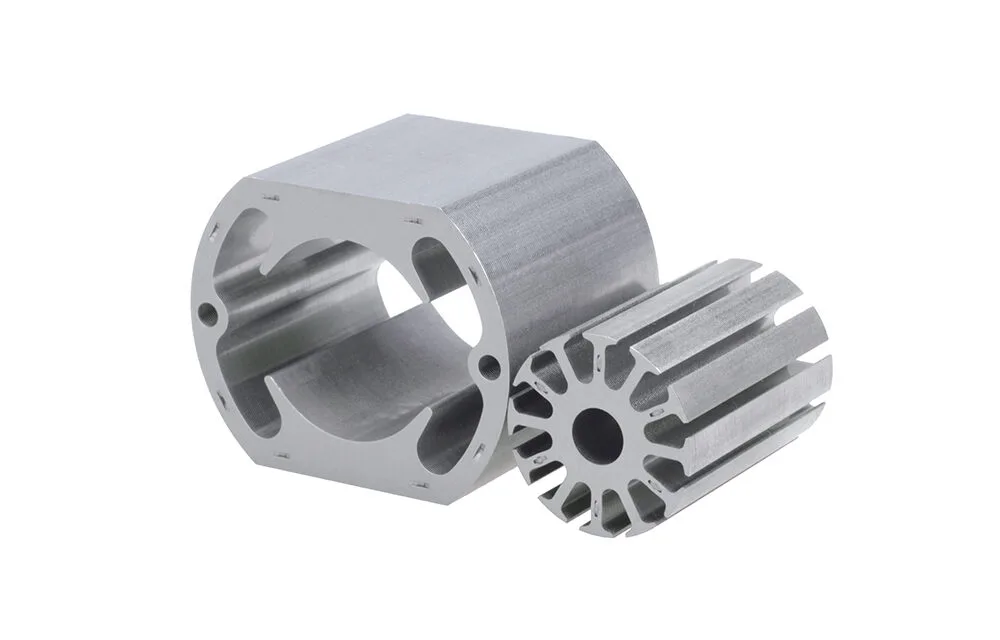
MANUFACTURING PROCESS
Follow the production stages from material loading to inspection and delivery. Historical factory photographs illustrate the process; the route is agreed for each project.
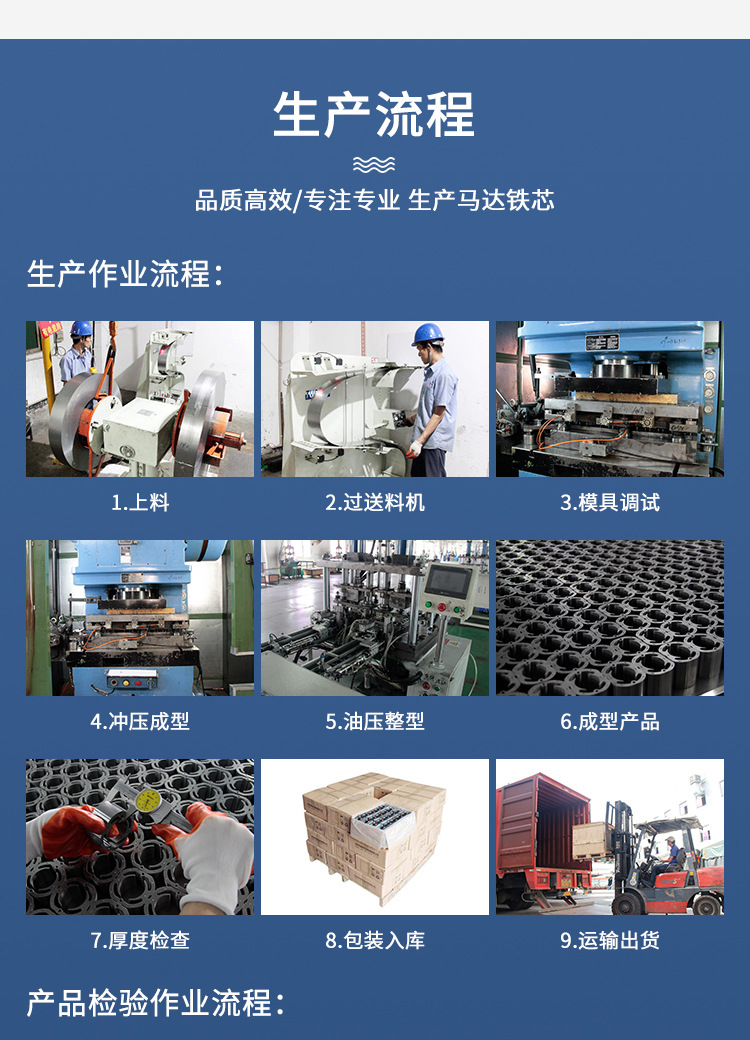
QUALITY INSPECTION
Inspection examples cover material properties, core construction and mating dimensions. Applicable checks, methods and tolerances are agreed during drawing and sample review.
MANUFACTURING SUPPORT
Material, component detail and factory communication are three priorities in a project review.
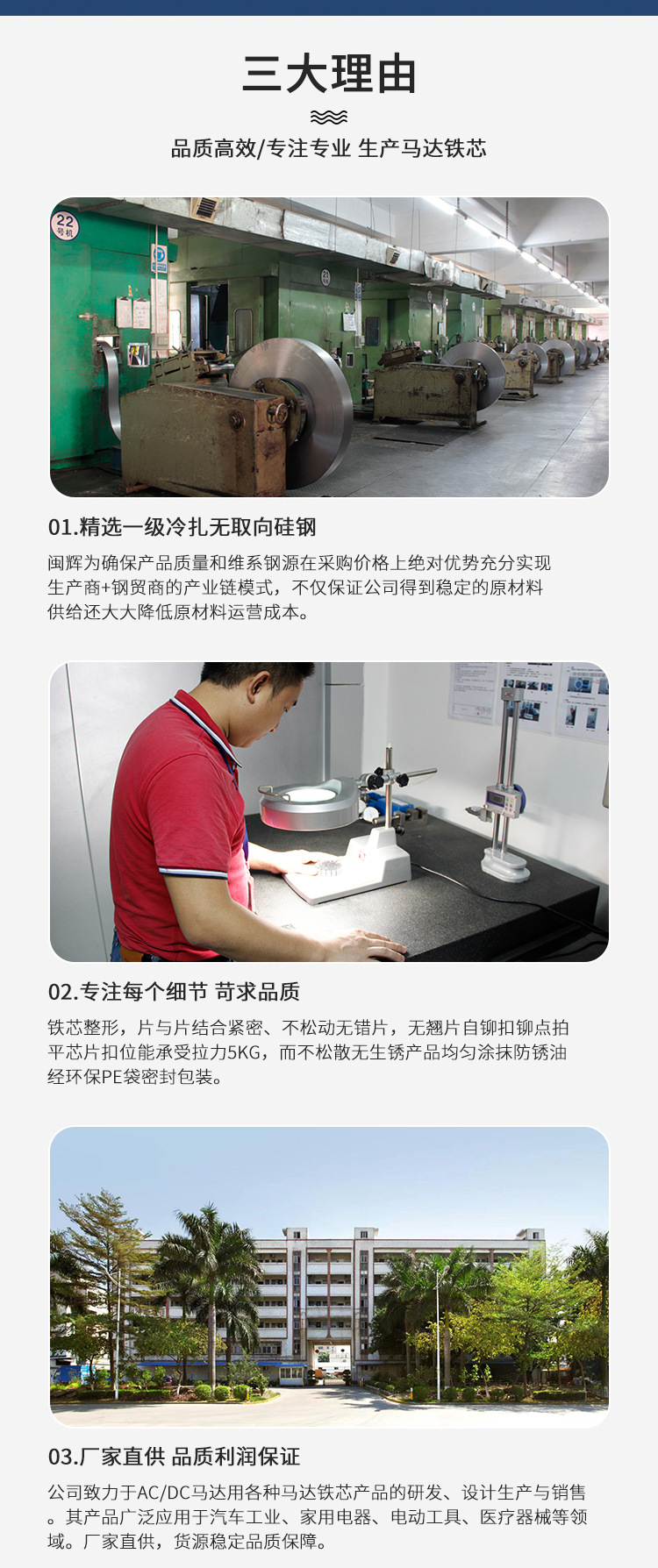
Align the specified material, lamination profile and tooling before production.
Review stack construction, mating dimensions and inspection requirements through samples.
Connect technical discussions, sample evaluation and delivery planning.
PROJECT PATH
A clear review sequence helps both teams align the product before volume supply.
Share the motor application, drawing status, supply form, estimated quantity and timing.
Confirm geometry, material, tooling and any open technical or commercial points.
Assess agreed samples and inspection criteria before production.
Manufacture to the approved scope and coordinate packaging and delivery.
ABOUT MINFAI
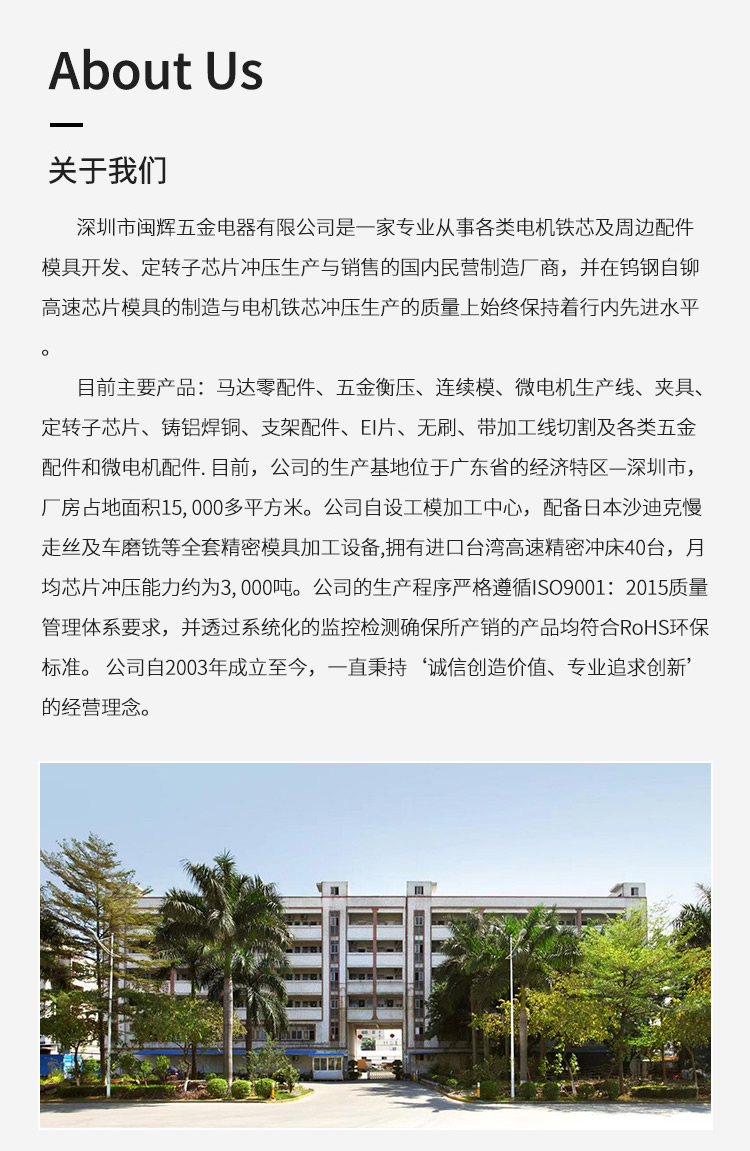
Based in Shenzhen, Shenzhen Minfai Metal Electric Co., Ltd. focuses on stator and rotor laminations, laminated cores and associated metal components. Customer drawings guide discussions on tooling, samples and supply requirements.
FREQUENT QUESTIONS
Yes. Tell us which supply form you need for the stator, rotor or matched set so we can assess the relevant construction and inspection requirements.
Yes. The drawing and application requirements are the starting point for technical review, tooling discussion and sample approval.
We can assess a requested size, including one found in an earlier catalog. Current tooling and availability are confirmed from your drawing, material and target quantity.
Part type, supply form, drawing status, material, estimated annual or batch volume and target timing. We can arrange an appropriate way to exchange confidential drawings after initial contact.
Minfai supplies universal motor stator laminations, rotor laminations and finished laminated cores for customer motor designs. Choose loose stamped sheets for your own stacking process, finished core stacks for downstream assembly, or a matched stator–rotor set when both component drawings are available.
The field stator and rotating armature have different component requirements. Review the stator pole profile, winding space and mounting references alongside the rotor slot profile, shaft bore and stack length. Describe interfaces with the shaft, winding and commutator where they affect the core drawing; the quotation must identify which components are included.
Browse universal motor product references to find a photograph close to your component form. Include the website reference with your inquiry and identify whether you need the stator, rotor or both. The reference helps our team locate the photograph; it does not replace a drawing, establish interchangeability or confirm current tooling availability.
For a matched set, provide the stator and rotor drawings together, with mating dimensions and the required supply form for each part. Agree sample acceptance and batch identification before production. This keeps a loose-lamination inquiry distinct from a finished-core or complete-assembly requirement.
| Requirement | Information to include |
|---|---|
| Stator drawing | Pole profile, winding space, mounting holes and the reference used to check the inside profile. |
| Rotor drawing | Slot shape, outside diameter, shaft bore, stack length and features that affect subsequent armature assembly. |
| Supply form | Identify loose laminations or finished stacks for each part and the required pairing or batch identification. |
| Historical references | A photograph or old model code is useful for discussion; current dimensions and tooling suitability are checked against a readable drawing. |
Yes. State the individual component and supply form in your inquiry. A matched set can also be discussed when both drawings, quantities and acceptance requirements are available.
Include the old reference alongside a current drawing or clearly identified sample. Material, dimensions, tooling status and order scope still need review before production is quoted.
Tell us whether you need laminations, finished cores or both. We will help define the next technical step.